

Grading Arapawa Blue Pearls
Arapawa Blue Pearls grading system helps us communicate our pearls' characteristics and the reasons for their value. We are proud to offer Certified New Zealand-origin Abalone-Paua Pearls that are untreated and unsurpassed in colour and lustre; the rarest blue pearls on earth come directly to you from our farm.
We are passionate about sharing everything we have learned about the Abalone-Paua mabe pearls, so let’s talk about one of the most complex and fascinating topics: grading our pearls. We will introduce you in this chapter to the fundamental elements of classifying and valuing our rare pearls. And remember, if you would like a deeper appreciation of this topic, you can book a visit to our farm, and we will offer a memorable Arapawa Blue Pearls Tour.
We have developed a grading system to communicate accurately to our clients the individual characteristics of the Paua pearls and the reasons for their value. To get there, we have completed a global benchmarking, considering other pearl growers' practices, experiences, and the best gemmological and jewellery sources of knowledge. During this process, we have received the support and guidance of Gina Barreto, a gemmologist, and a diamond technologist from the Gemmological Association of Australia, based in New Zealand.
Offering a product that is so unique within the pearls industry, like our Paua or Abalone pearls, is exciting but also brings some interesting challenges.
The Haliotis iris or rainbow-coloured abalone is a mollusc only found in New Zealand. So, a logical starting point was to study the local grading systems already implemented in the past by other New Zealand companies. In addition to that, we also found some interesting references from the Tahitian and Australian South Sea Pearls pearl farmers. During our investigation, we acknowledged critical sources of knowledge like the Cultured Pearl Association of America, CIBJO and GIA.
After processing all the information available, our first conclusion was that there is no unified or universal pearl grading system we could use as a direct model. As our blister pearls from the Haliotis iris have specific characteristics, and it would be an impossible mission (and a very unfair one) trying to copy the same criteria used for grading and pricing other well-known commercial pearls in the market.
Secondly, we decided that adopting information, terminology, and guidance from well-respected sources like CIBJO and GIA was the best way to support the creation of our own grading methodology. We have established a grading system for our Arapawa Blue Pearls that follows the Gemmological Institute of America's standards and terminology.
Consequently, the unique Arapawa Blue Pearls grading system is based on seven grades from Gem, A, B1, B2, C1, C2 to C3. Each pearl we offer to the market has been assessed using all the GIA seven pearl attributes: size, shape, colour, lustre, surface quality, nacre quality, and matching when this last attribute is relevant.
The following chart summarizes the characteristics of all seven grades regarding their quality and price levels.
This section doesn’t currently include any content. Add content to this section using the sidebar.
Arapawa Blue Pearls Grading
A Grade


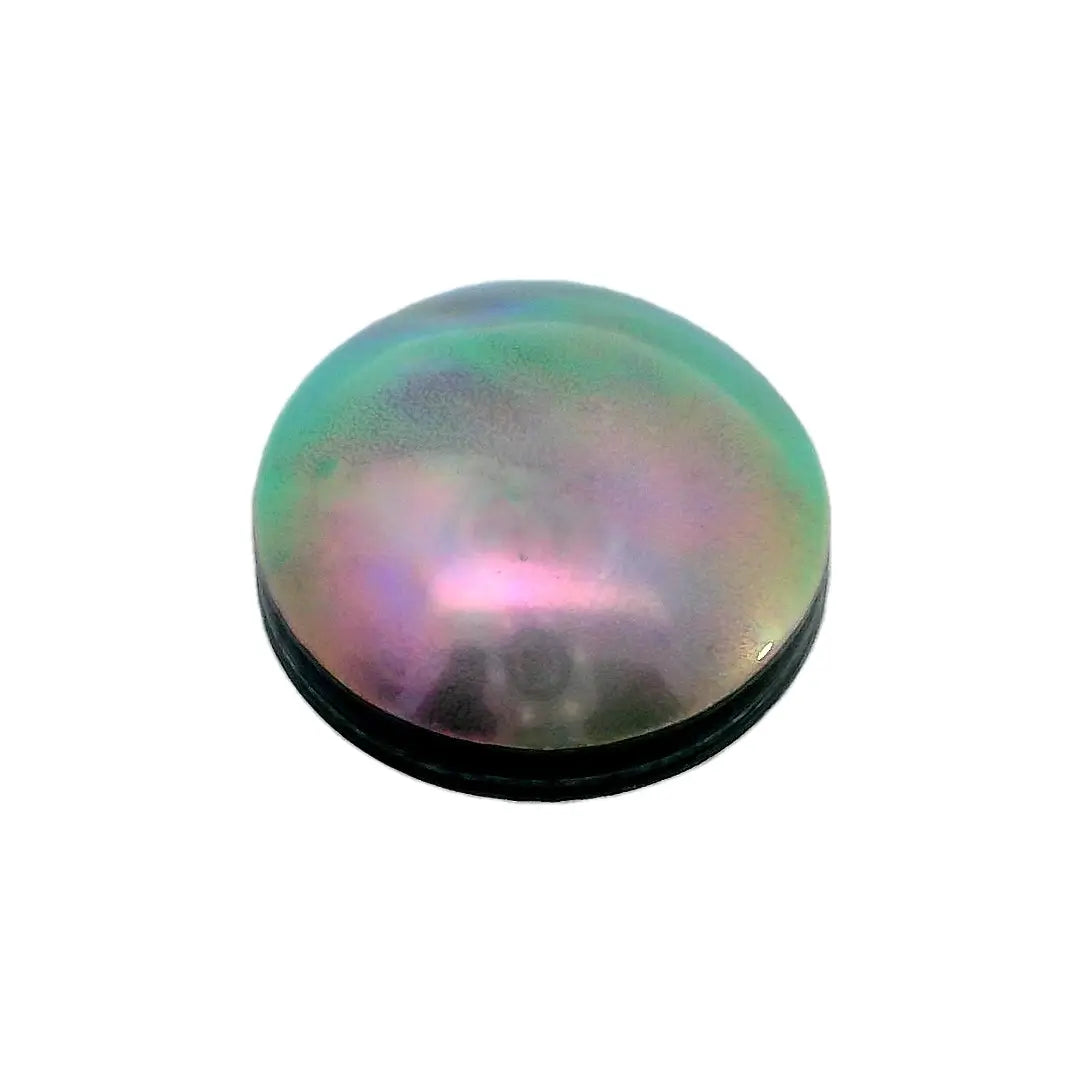
B1 Grade


B2 Grade


C1 Grade


C2 Grade


C3 Grade


Our quality control path
We have established several phases of quality control across the production process. Once we collect all the pearls coming from the harvest, the first step is to discard all the blisters and mabe pearls that do not satisfy the minimum requirements for beauty, surface, and nacre quality in preparing the official grading process.
It takes around 4 years to grow our blister pearls, and during that time, we provide the best resources and care to the selected molluscs we are farming. Growing happy and healthy Abalones will help our goal of creating beautiful and durable pearls. Regarding nacre thickness, experts have said it is impossible to determine an ideal measurement for all types of pearls. We have defined a minimum nacre thickness that all our pearls need to achieve, otherwise, they won’t be part of the grading process.
Any faulty pearl showing below our minimum thickness measurement, undesirable missing nacre spots, or cracks are discarded for nacre quality control. Notice we embrace the conchiolin or organic brown deposits in some of our pearl’s grades. As we do not over-polish or perform any pearl treatments, some clients prefer that type of “earthy” look, and grade B2 has a special place for them.
Ultimately, every pearl should be classified in one of the seven grades and must comply with the requirements of each level in terms of colour, lustre, nacre, and surface qualities. We labelled this first group as our “conventional pearls” at that stage.
Best of the best
There is an additional and final part of the process, where we perform a second classification of our pearls. The idea here is to recognize the value of the pearls that stand up from the “conventional label” in each grade. We make notes of any pearl showing off extra thickness (nacre), noticeable orient, or blue colour; those pearls will command higher prices.
Grading the rare blue colour in pearls
Colour analysis for any gemstone is an extraordinarily complex topic; for us, it is the most crucial attribute of this Paua pearls grading system. Of all the seven pearl attributes, colour is the one that makes our Abalone-paua pearls so unique. GIA experts have determined that blue is the rarest colour in the pearl industry. In our pricing system, the presence of blue colour increases the value of the pearl.
The classification we use to describe the colours of our pearls follows the GIA guidelines for pearl grading. Also, we have learned that colour perception is deeply connected with the perception of other pearl attributes.
Although our company name is Arapawa Blue Pearls, we also produce other colours different from legendary blue. Indeed, Mother Nature can surprise us with any colour variation; however, we have consolidated here the full range of our pearl hues:
| yellowish green | green | bluish green | blue green | green blue |
| greenish blue | blue | violet | purple | pinkish purple |
According to colour theory, hues can be warm or cool. For instance, notice that most of the colours in our Paua pearls come from the "cool" section of the hue circle, matching the unique palette from the Haliotis iris's mother of pearl.
The classification used to describe the colours of our pearls follows the international GIA guidelines for pearl grading

To correctly grade the colour of our pearls, we have taken into consideration the following steps:
-Regarding the tools used, we have built our own "evaluation room" following the GIA ideal conditions for pearls grading, especially their colour.
-We have created our master sets for grading the pearl attributes, including colour and overtones.
-Our team have been trained in the use of the grading system. Colour assessment can be subjective; we request two people to be involved in this part of the process.
-Also, we have tested our team's eyes performance, so we can be confident everyone is on the same page when talking about colour and we do not have colour perception problems.
In brief, when describing colour to our clients, we examine two aspects of the pearl: the primary body colour and the overtones or orient, if this applies to the item.
Other elements from the colour theory, like hue, tone, and saturation, have also been evaluated for a holistic colour approach. Still, as we want to simplify this process for our client, we have decided to summarize this topic as body colour + overtone/orient.
Overtone is the overlying translucent colour or colours in a pearl. Some prevalent overtones for our mabe Abalone pearls are pink, green, blue, violet, and yellow.
Orient is any combination of multiple overtone colours (two or more) overlying a pearl's body colour. Iridescence is also considered a synonym for orient, but it is more associated with describing white pearls' multiple overtones. In both cases, it should be easy to notice flashes of rainbow colours. Particularly, GIA Labs uses the word orient and not iridescence in their reports, therefore, we prefer to use the concept of orient. In our pricing system, the presence of noticeable orient increases the value of the pearl. Other experts use the term orient to describe a fine pearl's transparency, brightness, and beauty. We respect that perspective, but we do not use the word "orient" with that meaning in our grading system.
Proudly, we offer certified New Zealand origin Abalone-Paua Pearls from Arapawa Blue Pearls. Untreated and unsurpassed in colour and lustre, the rarest blue pearls on earth come directly to you from our farm.
Take our exclusive Pearl Tour and let us unveil one of the best-kept secrets in the jewellery industry. Arapawa Blue Pearls farms in New Zealand Abalone-Paua pearls, some of the world's finest, rarest, and most beautiful pearls.

Arapawa Blue Pearls produces around ten different types of pearl colours, including rare blue.
All the classified hues match the unique palette from the Haliotis iris's mother of pearl.

Cover of the Pearl Certification of Authenticity:
unique and sustainable farmed New Zealand origin Abalone-Paua Pearls from Arapawa Blue Pearls.
A special thankyou
To Gina Barreto for all the tremendous hard work she has put into our website content.
Gina always gave it 110% and never gave up. We will always be forever grateful.